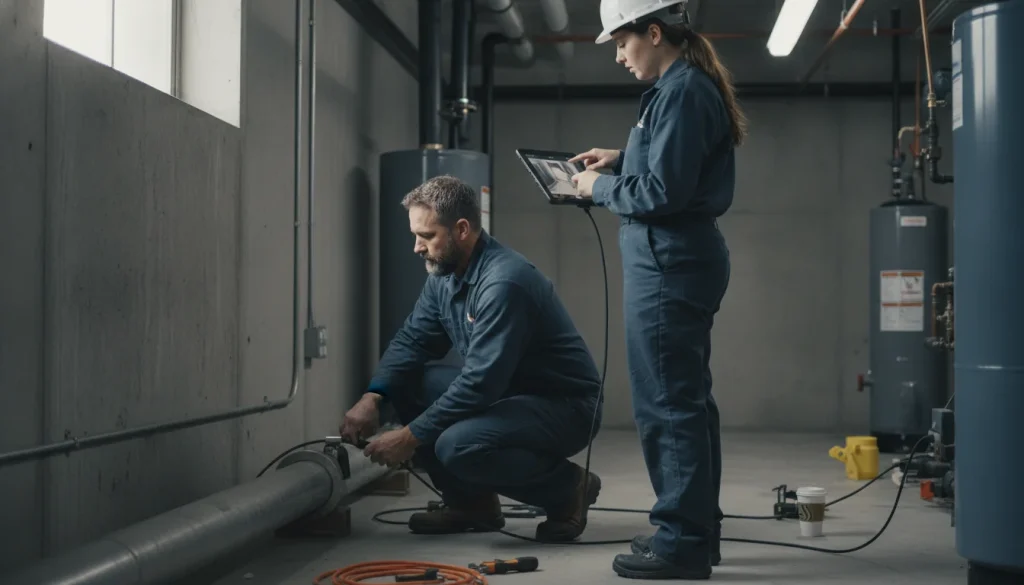
Prevent water damage, code violations, and downtime by setting a smart commercial plumbing inspection frequency for your facility in Magnolia, Texas. Most properties do well with semiannual checks, while higher‑risk sites need more frequent visits, and backflow testing must follow your local Authority Having Jurisdiction (AHJ) rules.
Here is the short answer: most businesses need a full plumbing inspection every 6–12 months. Sites with food service, healthcare, or schools often require quarterly checks. Grease traps need monthly service. Backflow testing follows AHJ requirements, which are commonly annual. Older buildings or hard water conditions may justify shorter intervals. Commercial plumbing inspection frequency means how often a licensed plumber reviews supply lines, drains, safety devices, and code items to prevent failures.
Key Takeaways
- Offices and retail: inspect every 6–12 months; high‑risk facilities quarterly.
- Grease traps monthly; backflow testing on the AHJ schedule (often annual in Texas).
- Age, occupancy, water quality, and Magnolia’s weather shape your interval.
- Professional inspections verify PRVs, heaters, drains, and documentation with a prioritized repair plan.
A pipe can burst before dawn, leaving tenants with wet floors and managers with a closed lobby. One missed check can do that. This guide explains how often to schedule inspections and how to build a plan that fits your site and Texas code.
Recommended inspection intervals for commercial properties
Office and retail spaces usually run well with checks every 6–12 months. Usage is steady, but pressure swings, silent leaks, and aging fixtures still cause damage. A steady schedule in Magnolia finds small problems early and reduces emergency plumbing calls.
Restaurants and food service need more attention. Quarterly inspections help manage hot water load, dish lines, and floor drains. Grease traps need monthly service to keep lines clear and meet health rules. A clogged grease line can shut a kitchen fast and lead to preventable plumbing repair work.
Multifamily and apartments have mixed needs. Inspect common areas and plant rooms twice a year. In‑unit checks work well once a year, often during routine filter or detector visits. That timing keeps access simple for tenants and limits disruptions in Magnolia’s busier move‑in seasons.
Healthcare and education face higher risk. Plan quarterly inspections for main systems. Critical areas like labs, dental suites, and sterilizers may need monthly visual checks to protect patient care, student safety, and uptime.
Warehouses and light industrial often fit an annual cycle. Still, backflow testing is mandatory on the schedule required by your AHJ. Many AHJs require yearly tests and updated tags.
Factors that affect your inspection schedule
Start with the building’s story. Age, pipe type, and any leak or repair history matter. Old galvanized or mixed piping can corrode and clog. Added valves and quick fixes also raise the chance of future trouble.
Use and occupancy drive wear. More people, more fixtures, and peak times strain the system. Busy restrooms, kitchens, or process equipment add stress. Note seasonal surges, local events, and holidays in Magnolia that change demand on drains and hot water.
Water quality shapes risk. Hard water scales heaters and valves. Poor water can pit copper and stain fixtures. Cold snaps in Magnolia raise freeze risk for exposed or poorly insulated pipes, especially in older masonry or tilt‑wall buildings.
Rules also set the pace. Insurance carriers, leases, and local codes in Texas may require inspections, records, and device testing. Keep proof on hand for owners, insurers, and inspectors. Your plumber should confirm the specific AHJ timeline for your property.
Last, think about risk tolerance. If an outage would stop revenue or tenant services, choose shorter intervals. Prevention is typically less disruptive, and while plumbing costs vary by scope and materials, unplanned downtime and water damage often cost far more.
What a professional commercial plumbing inspection includes
On the supply side, a technician checks shutoff valves, pressure‑reducing valves (PRVs), meters, and water heaters or boilers. A PRV is a valve that lowers incoming pressure to protect fixtures. The visit verifies setpoints, relief valves, and safe combustion where gas is used. Related needs may include Gas Line Plumbing when issues are found.
Drainage and venting get close attention. Pros may use camera scoping through cleanouts to see inside lines. Kitchen sites include grease lines. Basements often have ejector or sump pumps that need test runs. Findings may trigger Emergency Plumbing if an urgent fix is needed.
Leak detection and performance tests confirm system health. Teams run pressure checks, flow and temperature tests, and thermal scans to spot hidden leaks. These tests find small drips behind walls before they turn into insurance claims.
Documentation ties it together. Reports cite IPC/UPC items—common US plumbing codes—and any AHJ forms needed for backflow devices. You get a repair roadmap with clear priorities and timing. Where upgrades make sense, you may plan Kitchen Plumbing, Water Softener Installation, or Bathroom Installations to reduce future risk.
Implementing a preventative plan with minimal disruption
Plan work when people are not on site. Off‑hours or phased, floor‑by‑floor visits keep sales and services running. Post notices so tenants know when water will be off.
Log each asset in a CMMS, which is software that tracks equipment, tasks, and history. Trend data shows failing valves, hot water gaps, or repeat clogs. That helps set smarter intervals and turns raw readings into practical plumbing advice.
Bundle tasks by season. Test heat and recirculation before winter. Service roof drains before heavy rain. Align backflow, PRV checks, and heater service on the same day to cut visits.
Keep clear emergency protocols. Post shutoff maps, after‑hours steps, and who to call. Train staff on first moves for leaks, gas odors, or sewer backups. This keeps damage small while help is on the way.
A simple rollout looks like this:
- Set target intervals by use type and code needs.
- Build the asset list and enter it in the CMMS.
- Schedule off‑hours blocks and notify tenants.
- Complete the visit, document items, and assign repairs.
- Review trends each quarter and adjust the plan.
Frequently Asked Questions
### ### ### ### ### How do local codes affect inspection timing?
Local codes often set backflow test dates and documentation rules. Some AHJs require annual tests and tagged devices. Health departments can set grease trap service frequency. Insurance carriers may also require proof of inspections for coverage. Your plumber should confirm rules specific to Magnolia in Texas.
### ### ### ### ### What signs mean I should move to more frequent checks?
Look for recurring clogs, changing water pressure, stained ceiling tiles, or rising water bills. Short hot water supply and slow floor drains also warn of risk. If you fix the same issue twice in one year, shorten the interval until trends improve.
### ### ### ### ### Who should perform commercial inspections?
Use licensed commercial plumbers with code knowledge and test tools. They should provide photos, readings, and a clear report. Ask about camera scoping, thermal imaging, and backflow certification. Magnolia Texas Plumbing works across Magnolia every week and understands local AHJ processes and timelines.
Key takeaways
- Most offices and retail: inspect every 6–12 months; higher‑risk sites quarterly.
- Grease traps monthly; backflow testing per AHJ, often annual in Texas.
- Age, water quality, and occupancy determine the right cadence.
- Inspections span supply, drains, performance tests, and documentation with a repair plan.
- Use off‑hours scheduling, a CMMS, and clear protocols to limit downtime.
Conclusion
A consistent inspection rhythm protects tenants, assets, and revenue. Magnolia Texas Plumbing helps owners and managers set schedules that match use, code, and risk across the Magnolia area. For a tailored plan and a smooth visit from start to finish, Contact us.