A water heater leaking from bottom needs quick care to limit damage. The water may come from a drain valve, pipe joint, relief valve, or failed tank. Shut off water and energy safely, avoid unsafe equipment, and arrange a professional check when the source is unclear or the leak continues.
A small puddle can spread under floors or into walls. It may also reach electrical parts or stored items. The first goal is to control water flow without touching hot, gas, or electrical equipment.
Table of Contents
- What should you do when a water heater is leaking from the bottom?
- Why is water coming from the bottom of a water heater?
- Can a water heater tank leak from the bottom?
- How can you tell where a water heater leak is coming from?
- Can a leaking water heater be repaired?
- Should you repair or replace a water heater leaking from the bottom?
- What should you expect from professional water heater service?
- Frequently Asked Questions
What should you do when a water heater is leaking from the bottom?
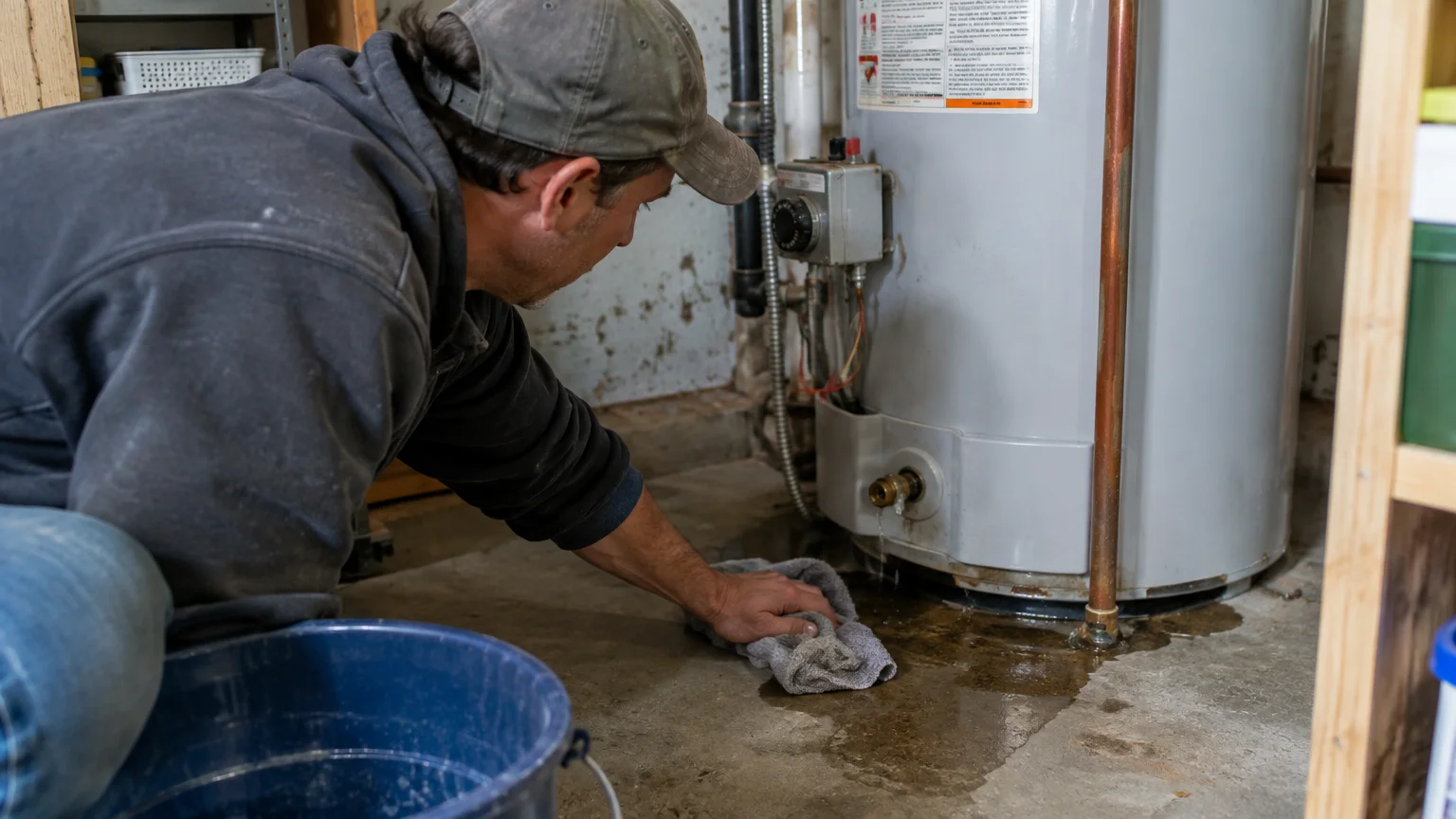
First, keep people and pets away from the area. Move boxes and other items away from the water if it is safe. Do not walk through standing water near electrical parts. If water is spreading, protect nearby floors only when you can do so without touching unsafe equipment.
How to shut off the water and power safely
Find the cold-water pipe at the top of the tank. Turn its shutoff valve clockwise until it stops. If the valve will not close, you may need the main water shutoff for the home. Open a hot-water tap briefly only if there is no burn risk.
For an electric heater, turn off the matching breaker. For a gas heater, use the maker’s safe control setting. Close the gas supply only when you know it is safe. Do not work on gas controls, wires, burners, or flue parts without proper training.
When a bottom leak requires urgent plumbing help
Get urgent help if water is spreading, the tank is bulging, or the flow is strong. Help is also needed when the shutoff will not stop the water. A gas smell, burning smell, sparks, or wet electrical equipment needs immediate care. Leave the area if gas may be escaping and contact the proper emergency service.
Magnolia Texas Plumbing helps property owners with water leaks and related plumbing issues. After the system is isolated, a homeowner may wipe up a small amount of water. Do not remove covers, open gas controls, or drain a hot tank without clear instructions.
Why is water coming from the bottom of a water heater?
Water at the base does not always mean the tank has failed. It may come from a drain valve, a temperature and pressure relief valve, a pipe joint, or water running down the outside. Checking the highest wet spot can help show where the leak starts.
Leaking drain valve or temperature and pressure relief valve
The drain valve is near the lower part of many storage tanks. It may drip when it does not close fully or when its seal is worn. A cap is not a lasting repair because it can hide a damaged valve.
A temperature and pressure relief valve is often called a T&P valve. It releases water when heat or pressure becomes unsafe. Never block, plug, or remove its discharge pipe. A relief valve that keeps releasing water needs a professional test.
Loose connections, corrosion, and damaged fittings
Water may come from the cold-water inlet, hot-water outlet, flex connector, shutoff valve, or nearby pipe. A loose connection may be fixed, but rust can weaken the pipe or fitting. Water can also travel along insulation or the tank shell, making the bottom look like the source.
Hard-water minerals can affect valves and fittings over time. Condensation can also form when cold water enters a warm room or tank. This moisture may collect below the heater without a broken part. Dry the area and watch it closely, but arrange an inspection if water returns.
Can a water heater tank leak from the bottom?
Yes. A storage tank may leak from the bottom when corrosion damages its inner lining or steel shell. When the tank wall fails, changing a small outside part will not stop the leak. A tank holds water under pressure, so it should not be treated as a simple patch job.
How internal tank corrosion causes permanent leaks
Most tank water heaters have a protective lining and an anode rod. An anode rod is a metal part that corrodes before the steel tank. Over time, the rod can wear out and leave the tank more open to corrosion.
Corrosion often starts inside where it cannot be seen. It may later cause rusty water, damp insulation, or a small hole. Water may collect under the outer jacket and appear only at the base. Anode Rod Replacement Water Heater service may help protect a sound tank, but it cannot restore a failed tank shell.
Signs the storage tank has failed
A failed tank often has one or more of these signs:
- Water returns after the supply valve is closed and nearby fittings are dry.
- Rust marks, damp insulation, or stains appear around the lower tank.
- The tank shell has corrosion, swelling, cracks, or a wet seam.
- The unit keeps leaking after valves or connectors are repaired.
- Hot water becomes unreliable while the tank shows clear damage.
A tank leak usually calls for replacement instead of a lasting repair. Magnolia Texas Plumbing can help homeowners compare the condition of the existing unit with suitable replacement choices. This is also important for rental homes, offices, and other properties in Magnolia.
How can you tell where a water heater leak is coming from?
You may find the source by drying the heater and checking each connection from top to bottom. Do this only after the water, gas, and electricity are handled safely. The goal is to watch the leak, not to take the unit apart.
Checking the tank, valves, pipes, and surrounding area
Use a dry cloth to check the cold-water inlet, hot-water outlet, relief valve pipe, drain valve, and nearby fittings. Look at the floor beneath the heater too. A small mirror may help you see the back without moving the unit.
Do not touch bare wires, burner parts, or hot metal. Do not force a corroded connection. If water comes from inside the tank jacket, the tank may be damaged. Photos can help a plumber understand the location before arriving, but photos do not replace an inspection.
Why condensation can look like a plumbing leak
Condensation is water that forms when moist air touches a cooler surface. It may appear after a tank fills with cold water, during humid weather, or in a poorly aired space. Condensation often creates light moisture across several surfaces instead of one steady drip.
Dry the area and check it again after the heater runs normally. A steady stream, wet seam, or growing puddle is more likely to be a plumbing leak. Water damage around the base still matters, even when the first leak seems small. A plumber for water heater repair can trace hidden moisture and inspect connected pipes.
Can a leaking water heater be repaired?
Some leaks can be repaired when the tank is sound and the failed part is easy to reach. Common repairs include replacing a drain valve, changing a faulty relief valve, securing a connection, or fixing nearby pipework. The right repair depends on the source and the condition of nearby parts.
Leaks that may be fixed with parts or connections
A worn valve or loose connector may need only a part repair. The technician isolates the water, releases pressure when needed, replaces the part, and tests the system. They may also check for corrosion because a new fitting may not seal against a badly damaged pipe.
A homeowner may check for visible drips and clean light dust from the area. Simple upkeep includes keeping the heater easy to reach, watching for rust, and following the maker’s care guide. Do not bypass safety valves or seal a leaking pressure outlet.
When repair is unsafe or unlikely to last
Repair is usually not a good choice when the tank shell leaks, the base is badly rusted, or several parts have failed. A patch, sealant, or clamp may hide water for a short time while pressure remains inside the tank. It may also delay needed replacement and allow more property damage.
Gas, electrical, and pressure faults need trained service. Emergency water heater repair may be needed when the leak cannot be controlled or hot water is lost during a serious failure. The safest choice depends on an inspection, not on the size of the first puddle.
Should you repair or replace a water heater leaking from the bottom?
Repair may make sense when the tank is healthy and one replaceable part has failed. Replacement is more likely when the tank shell leaks, rust is widespread, repairs keep returning, or the unit no longer fits the property’s needs. A professional can compare safety, dependability, capacity, and future care.
How age, condition, capacity, and efficiency affect the decision
The heater’s age matters, but age alone does not decide the answer. A well-kept unit with a sound tank may need a simple repair. A newer unit with a damaged tank may still need replacement because the tank cannot be restored.
Capacity matters too. A unit that cannot meet household demand may cause poor comfort even after a leak repair. A replacement should match the number of people, fixtures, recovery needs, fuel type, venting, and available space. Local rules may also affect the installation.
Tank versus tankless replacement considerations
A tank water heater stores hot water in an insulated vessel. It is familiar and may be simple to replace with a similar model. It can suit homes with steady hot-water demand. A tankless water heater heats water as it moves through the unit. It saves space, but the home may need the right gas, electrical, water, and venting capacity.
Tankless hot water heater installation needs careful sizing. A unit that is too small may not serve several fixtures at once. A unit that is too large may require more system work. Water Heater Installation should include safe connections, correct venting, temperature controls, and testing.
What should you expect from professional water heater service?
Professional service starts with a safety check and a careful search for the leak source. The technician should inspect the tank, valves, connections, controls, nearby flooring, and signs of hidden water damage. The findings should explain whether repair or replacement is the better choice.
Inspection, diagnosis, repair, or replacement steps
The visit may include shutting down water and energy supplies, testing visible parts, checking pressure parts, and looking for corrosion. If repair is suitable, the technician replaces the failed part and tests for leaks. If the tank has failed, the technician explains replacement choices that fit the property.
The final cost is confirmed in a quote after the work and system needs are known. Cost depends on parts, unit size, access, damage, urgency, fuel type, and installation changes. Replacement usually involves more work than one valve repair because removal, connections, venting, and testing may all be needed.
How to prevent future leaks and water damage
Regular checks can find small problems early. Keep the area clear, look for dampness or rust, and learn where the water and energy shutoffs are. Follow the maker’s maintenance guide and have safety parts checked when a problem appears.
A drain pan and a proper discharge route may help limit damage where allowed and correctly installed. Leak alarms can give early warning, but they do not replace a working shutoff. Property owners should share shutoff instructions with tenants, staff, and anyone who may need them.
Key takeaways
- Shut off water and energy safely when a leak appears.
- A bottom puddle may come from a valve, fitting, pipe, or tank.
- A leaking tank shell usually needs replacement instead of a patch.
- Homeowners can observe and clean safely but should not open unsafe equipment.
- Proper sizing and installation matter when choosing a tank or tankless unit.
Frequently Asked Questions
Is a water heater leaking from bottom always an emergency?
Not every small drip is an immediate crisis, but every leak needs attention. A steady flow, spreading water, gas smell, sparks, damaged wiring, or a failed shutoff needs urgent help. Isolate the system only when safe, protect the area, and avoid hot, electrical, or gas parts.
Can a homeowner fix a leaking water heater valve?
A homeowner can check for a visible drip and see whether the supply valve is closed. Replacing a valve involves pressure, hot water, and sometimes nearby gas or electrical equipment. Use a qualified plumber when the valve is stuck, rusty, hot, or still leaking after isolation.
How long can a leaking water heater keep working?
There is no safe set time. A small fitting leak can worsen without warning, while a tank leak means the pressure vessel has failed. Continued use may damage floors, walls, or electrical parts. Handle the water and energy supply safely, then arrange prompt professional diagnosis.
Is a leaking water heater worth repairing?
It may be worth repairing when the tank is sound and the problem is a replaceable valve, connector, or pipe fitting. Replacement is more suitable when the tank shell leaks, corrosion is widespread, or failures keep returning. The choice depends on condition, capacity, safety, and future reliability.
Who can help with a leaking water heater in Magnolia?
Magnolia Texas Plumbing provides local guidance for water heater leaks, repairs, and replacement decisions around Magnolia. Service may help property owners in Downtown Magnolia, Mostyn Manor, Pinehurst, Stagecoach, Tomball, The Woodlands, and nearby communities. A technician can identify whether water comes from a valve, fitting, pipe, or tank and explain the next safe step.
Conclusion
A water heater leaking from the bottom should never be ignored. The cause may be simple, such as a loose connection, or serious, such as a failed tank. Safe shutoff steps, careful checks, and timely service can limit damage and help owners choose a lasting repair or replacement.
Magnolia Texas Plumbing can help property owners understand the problem and plan the next step. Contact us to arrange professional help.