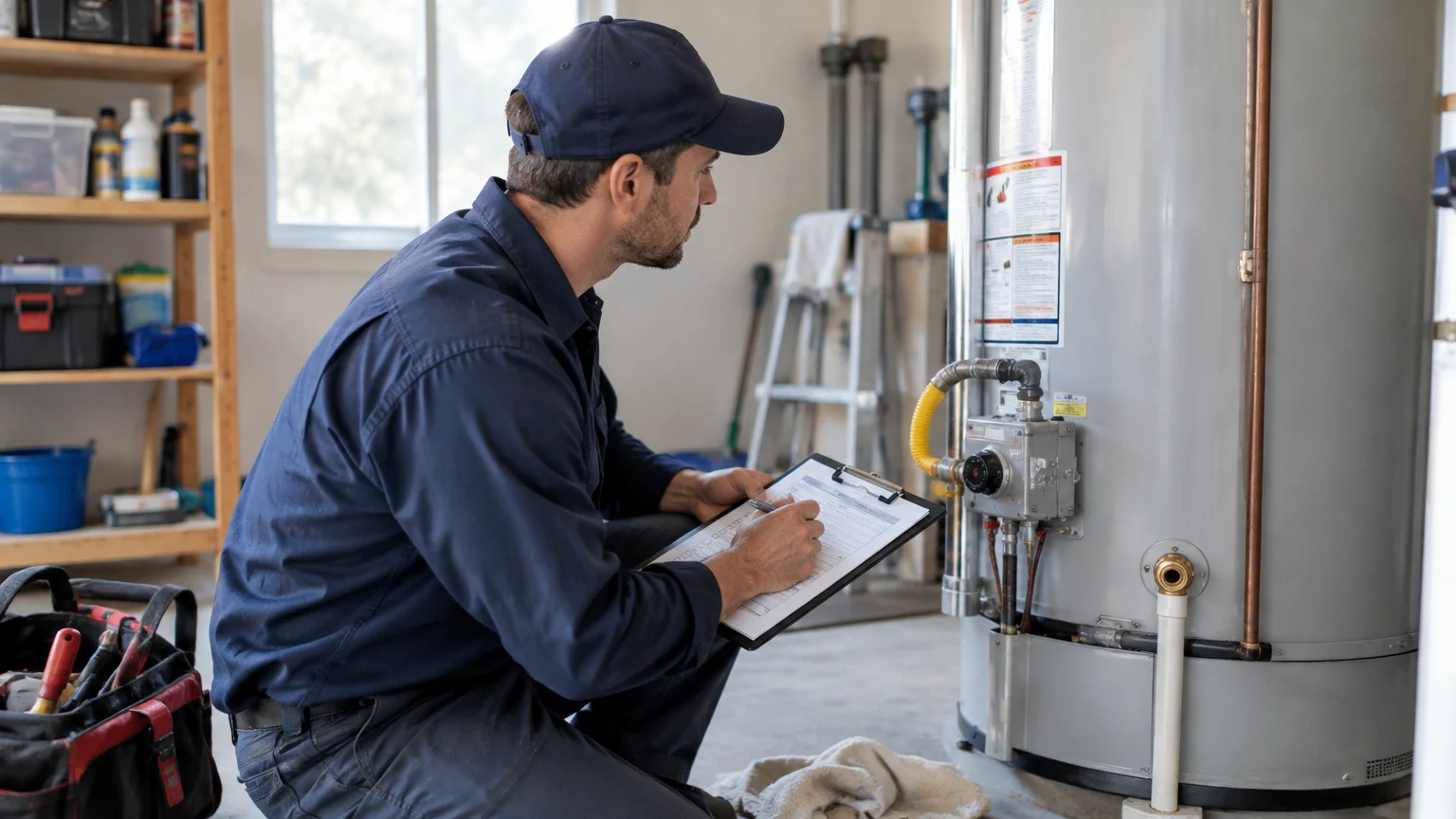
A water heater maintenance checklist helps you spot leaks, rust, and changes in hot water before they become bigger problems. Homeowners can safely check the area and visible parts, but should not open covers or handle gas, wiring, or safety valves. Follow the unit’s manual and call a qualified plumber when a check or repair is not safe.
What does routine water heater maintenance include?
Routine maintenance means checking the heater and following the care steps in its manual. The right tasks depend on whether the unit stores hot water in a tank or heats it as water flows. A tankless water heater has different parts and care needs than a tank model. Magnolia Texas Plumbing can help property owners learn which upkeep fits their system.
Know your water heater type and check the manufacturer’s guidance
First, find the model label and read the owner’s manual. It explains the unit type, safe steps, and care needs. A tank heater stores hot water in an insulated tank. A tankless unit heats water as it moves through the system. The manual may also tell you how to check filters or when to arrange service.
Do not guess if the manual is missing or hard to understand. A plumber for water heater repair can identify the model and explain its needs. Write down the unit’s age, past repairs, and any changes in hot water. Keep those notes with the manual so they are easy to find later.
Gather basic safety precautions before inspecting the unit
Before you look closely, keep the space around the heater clear and dry. Do not touch wet wires, remove covers, or change gas controls. If you smell gas, leave without using switches or flames. Once outside, contact the gas utility or emergency services. The U.S. Consumer Product Safety Commission shares guidance on carbon monoxide and fuel-burning appliances.
You do not need a professional for simple visual checks or to keep the area clear. However, work on gas lines, wiring, vents, or safety parts needs a qualified professional. Do not open a sealed panel or try to fix a leak yourself. Staying within safe limits matters more than completing every checklist item.
What should you check during a water heater maintenance inspection?
Use these ten checks to spot changes, not to take the heater apart. Stop if a check involves hot water, gas, wiring, or a valve you do not know how to use. A visual review can help you decide when to ask for Water Heater Repair or another service.
Steps 1–5: Inspect for leaks, corrosion, ventilation issues, and temperature changes
- Look for water. Check the floor, pipes, and tank base for damp spots or puddles.
- Look for rust or corrosion. Check visible fittings and the tank outside. Do not scrape or remove parts.
- Check the vent area. For fuel-burning units, look for loose or blocked vent parts from a safe distance.
- Notice changes in hot water. Make a note if hot water runs out sooner or its temperature changes without warning.
- Listen for new sounds. Popping or rumbling can point to sediment or another problem that needs a closer look.
Keep the area around the heater open so air can move and the unit can be checked. Do not store items against vents or controls. If your home also has low water pressure, the cause may be somewhere else. A plumber can check whether the heater, pipes, or another part of the plumbing system is involved. Drains and other plumbing parts may need separate checks, too.
Steps 6–10: Check the pressure relief valve, flush sediment when appropriate, and review connections and controls
- Find the pressure relief valve. This safety part lets out extra pressure. Do not test or use it unless the manual gives clear steps and the task is safe.
- Ask whether flushing is right for the unit. Sediment can build up in tank heaters, but hot water can burn you or draining can harm the unit. Follow the manual or ask a plumber.
- Look over visible connections. Check for drips or fittings that look loose. Do not tighten parts while the heater is hot or running.
- Review the controls from outside. Note warning lights, error messages, or settings that have changed.
- Write down what you find. Record the date and any changes in sounds, leaks, or hot-water supply.
Tankless units may need filter care or checks for mineral buildup. Follow the maker’s directions for your model. Tank heaters can need different checks, and anode rod replacement may be part of care for some models. The anode rod is a part that helps protect a tank from rust. Do not assume every water heater needs the same task or schedule.
How often should a water heater be maintained?
Follow the owner’s manual first, because care needs differ by model. Water quality, household use, and heater type can also affect how often service is needed. A busy home or a unit with hard-water buildup may need more attention than a system used less often. Keep notes so you can spot changes over time.
Adjust the schedule for water quality, usage, and heater type
Check the heater’s outside and the floor nearby from time to time. Pay extra attention after a change in sound or hot-water supply. Read the manual for any schedule for flushing, filter cleaning, or other care. Do not drain a tank just because a general checklist says to. The wrong steps can cause burns or harm the system.
Water conditions vary in Magnolia and nearby communities, from Downtown Magnolia and Mostyn Manor to Pinehurst, Stagecoach, Tomball, and The Woodlands. If mineral deposits keep returning, or a tankless unit shows a filter warning, ask a plumber which schedule fits the model. A plumber can also say whether the system needs cleaning or repair. This is safer than using one schedule for every home.
Know which maintenance tasks require a licensed plumber
Homeowners can keep the area clear, look for visible leaks, and note changes in how the heater works. Tasks involving gas, electrical parts, vents, pressure-relief valves, or parts inside the unit need professional care. Never use a flame to check for a gas leak. If you smell gas, leave and contact the right emergency help from a safe place.
A qualified plumber can inspect parts that are hard to reach and explain what work may be needed. For a tankless system, ask whether the setup affects venting or other parts of the home. A professional can also explain tankless water heater installation options if you are thinking about replacing the unit. The right plan depends on the home, heater, and local rules.
When should you repair or replace a water heater?
A leak, repeated loss of hot water, or safety concern needs prompt attention. Repair may make sense when one part has failed and the rest of the unit is in good shape. Water heater replacement may be worth discussing if problems keep returning or the heater no longer meets the home’s needs. A plumber can inspect the system before suggesting either option.
Warning signs and repair-versus-replacement decisions
Watch for water near the base, rust, odd sounds, weak hot-water supply, or changing temperatures. A leak at the bottom may come from a failing tank or a nearby connection, so someone needs to find its source. Do not assume that every puddle means the tank must be replaced. If water is spreading or near electrical parts, stay clear and seek urgent help.
The choice depends on the cause, the unit’s condition, its repair history, and how well it serves the home. A small part problem may be fixed without replacing the heater. A damaged tank or repeated failures may point to replacement. Water Heater Installation can include choosing a tank or tankless model that fits the property and its hot-water needs.
Frequently Asked Questions
What should someone do if a water heater is leaking from the bottom?
Stay clear of hot water and nearby electrical parts. From a safe distance, look to see whether water may be coming from a pipe or the tank. If the leak is active or spreading, seek plumbing help promptly. A plumber can find the source and explain whether repair or replacement may be needed.
Can homeowners flush a water heater themselves?
Only do this if the manufacturer’s manual gives clear steps and you can follow them safely. Water inside a heater can burn you, and the wrong steps can damage parts. If the process is unclear, or no one has checked the unit before, ask a licensed plumber to do the work.
How can someone check for a gas leak?
Never use a flame to check for gas. If you smell gas, leave the building without touching switches or using electronics inside. From a safe place, contact the gas utility or emergency services. Do not go back inside until responders say it is safe.
Does a tankless water heater need maintenance?
Yes, but its care steps differ from those for a tank heater. The manual may explain filter cleaning or checks for mineral buildup. A plumber can confirm the right care plan for the model and review repair needs if warning lights or hot-water problems appear.
Key takeaways
- Use the manual to guide care for your exact heater model.
- Keep the area clear and check for leaks from a safe distance.
- Do not handle gas, wiring, or safety valves without proper training.
- Ask a plumber about repeat problems and repair or replacement choices.
Conclusion
A steady maintenance routine can help you notice changes early and avoid unsafe do-it-yourself work. Use this water heater maintenance checklist for visual checks, then follow the maker’s directions for your unit. Magnolia Texas Plumbing serves property owners and can assess a heater that leaks, makes new sounds, or does not supply steady hot water. Contact us to discuss what your water heater may need.