Hair salon plumbing problems often include slow shampoo sinks, leaking hoses, weak water flow, and hot water that runs out. Hair and products can collect in drains, while busy stations put steady demand on fixtures and heaters. Staff can do simple checks, but repeat clogs, leaks, and unsafe equipment need a plumber.
A plumbing fault can interrupt appointments and make daily work harder. Knowing the common problems helps salon owners act early and protect staff, clients, and the building. In Magnolia, quick attention to a small plumbing issue may help keep a station in use.
Table of Contents
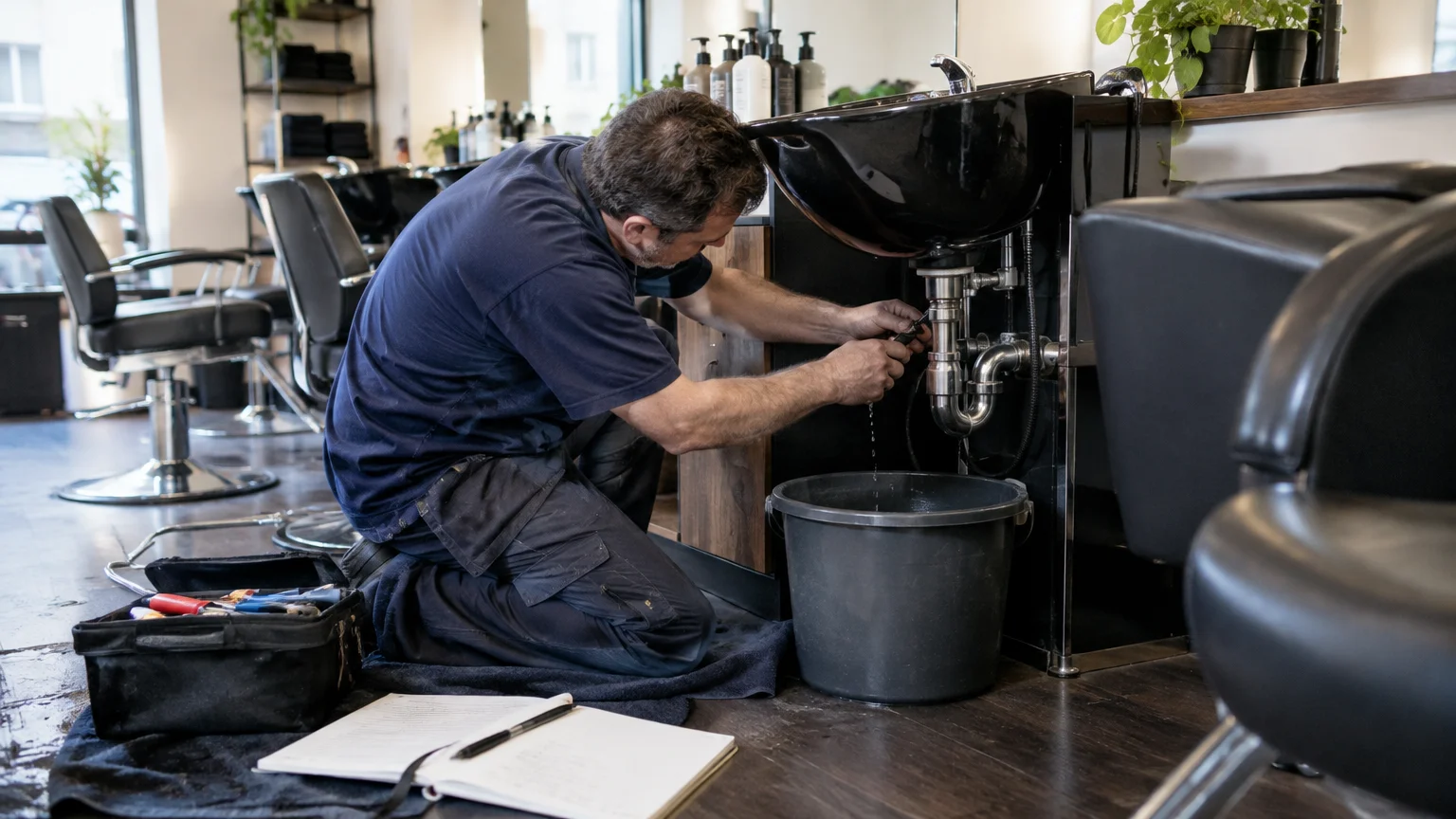
- What plumbing problems are common in hair salons?
- Why do shampoo station sinks drain slowly or clog?
- Why is a shampoo station leaking or losing water pressure?
- Why does a hair salon run out of hot water?
- How can salon owners prevent plumbing problems?
- When should a salon call a commercial plumber?
- How can a salon plan plumbing upgrades?
- Key takeaways
- Frequently Asked Questions
- Conclusion
What plumbing problems are common in hair salons?
Hair salons often deal with slow or blocked shampoo sink drains, dripping fixtures, and weak water flow. Hot water problems can affect more than one station at a time. Restroom toilets and faucets may also fail from frequent use. Finding the cause early can help keep salon stations working and limit water damage.
How daily salon use strains plumbing fixtures
A shampoo station may serve many clients during a workday. Hair, conditioner, shampoo, and styling products can go down the drain. Over time, this mix may stick inside the pipe and slow water flow. Spray hoses and faucet handles can also wear from repeated use.
Hot water systems face steady demand, too. Several stations may use hot water close together. The heater may then struggle to keep up. A salon might notice cooler water, changing temperatures, or longer waits between clients. These signs can point to a system problem, a change in use, or equipment that does not fit the business.
Restroom plumbing matters just as much. A toilet that keeps running wastes water and may have a worn part inside its tank. A dripping faucet or backed-up drain can disrupt staff and clients. Staff can look inside a toilet tank for a part that is stuck or out of place. If the issue returns or a part needs replacing, arrange a repair.
Which issues need immediate attention?
A steady leak, water near electrical equipment, a strong gas smell, or a drain backup needs quick attention. Turn off the fixture or nearby water valve if it is safe. Keep people away from wet areas. Do not touch electrical items that may have become wet.
If you suspect a gas leak, leave the building. From a safe place, contact the gas utility or emergency services. Do not use a flame to look for a leak. Magnolia Texas Plumbing can help salon owners assess a plumbing concern and learn what may need repair.
Why do shampoo station sinks drain slowly or clog?
Shampoo station sinks may drain slowly when hair and product residue build up in the trap or drain line. The trap is the curved pipe under a sink that holds water and helps block sewer gas. A clog deeper in the line may need a plumber’s tools to clear safely.
How hair, product residue, and debris affect drains
Loose hair can twist together and catch inside a drain. Conditioner, hair masks, and styling products may leave a sticky film. More hair and debris can cling to that film, leaving less room for water to pass. The sink may gurgle, drain slowly, or hold standing water.
A small strainer can catch loose hair before it enters the pipe. Staff should empty it into the trash after each use. Do not push hair into the drain. Strong chemical cleaners should not be a routine fix. Some cleaners can damage pipes, splash back, or make unsafe fumes, especially if mixed with another product.
What salon staff can safely check before calling a plumber
Staff can remove visible hair from the strainer and clean the basin as the maker directs. They can also check whether a nearby sink drains as usual. If only one station drains slowly, the blockage may be close to that fixture. If several sinks or floor drains back up, a shared drain line may be affected.
Stop using the sink if water rises, sewage appears, or the clog returns soon after cleaning. Staff should not take plumbing apart unless they have the right training. A plumber can check the trap and pipe, clear a deeper clog, and look for damage that simple cleaning will not fix. Tell the plumber when the issue began and which fixtures are affected.
Why is a shampoo station leaking or losing water pressure?
A shampoo station may leak or lose water pressure because of a worn hose, blocked spray head, loose connection, or faulty valve. A leak behind a wall or under a floor needs a professional check. Finding the source matters because hidden water can damage the building before it is easy to see.
Common causes in hoses, spray heads, valves, and connections
A split spray hose may leak only while someone uses the station. A loose fitting can drip under the basin. Mineral buildup or debris may block a spray head and weaken the flow. A valve that does not open fully may also limit water to one station.
Staff can look for visible drips and check whether a hose is bent or pulled tight. If the spray head comes off, follow the maker’s cleaning steps. Do not force a stuck part or tighten a connection that staff cannot reach safely. Stop using the station if water sprays toward electrical equipment or runs into a wall or cabinet.
Low water pressure in a house can have several causes, and the same basic checks may help at a salon. Check whether low flow affects one fixture or the whole building. If other sinks work normally, the issue may be at that station. If several fixtures have weak flow, a shutoff valve, supply pipe, or wider plumbing issue may be involved.
When a leak may indicate a hidden pipe problem
Water stains, a musty smell, bubbling paint, or damp flooring can point to a hidden leak. A drip that returns after a visible fitting is tightened may also have another cause. Staff should note the location and any changes, then limit water use nearby.
Do not open a wall or floor to search for a pipe. A plumber can use leak tools and check connections that can be reached. If water is spreading, use a safe shutoff valve and arrange prompt help. Magnolia Texas Plumbing can advise salon owners when a visible drip may need a closer check.
Why does a hair salon run out of hot water?
A salon may run out of hot water when demand is higher than the heater can meet, or when the unit has a fault. A worn part, buildup inside a tank, or an undersized system may cause changing temperatures. A plumber can find the cause and explain whether repair or replacement is a better fit.
How salon demand affects commercial water heater performance
A salon’s hot water use may rise and fall during the day. Several shampoo stations can draw hot water close together, leaving less for the next client. The pipe layout and heater condition also affect how soon hot water reaches each station.
Staff can note when the problem happens, which stations are affected, and whether water turns cold at once or warms slowly. Check that no one has changed the heater controls without permission. Do not remove covers or change gas, electrical, or temperature settings without proper training.
A tank heater stores hot water in a tank. A tankless heater warms water as it flows through the unit. Both types have limits, and a tankless unit still needs enough capacity for salon demand. A plumber can check the heater, fuel or power supply, venting, and expected use before suggesting a fix.
Signs the unit needs repair or replacement
A unit may need repair if hot water stops, the temperature changes without warning, or a part or control fails. A tank heater that leaks near its base may have a serious tank problem. Water could also come from a nearby pipe or valve. Keep clear of pooled water and ask a plumber to find the source.
Repeated trouble, visible rust, odd sounds, or water around the unit all need attention. A plumber can explain if repair is practical or replacement is a better long-term choice. Water Heater Repair can address faults, while Water Heater Installation may be needed for a new system. The right choice depends on the unit’s condition and the salon’s needs.
How can salon owners prevent plumbing problems?
Salon owners can prevent many plumbing problems with simple daily habits and planned checks. Keep hair out of drains, clean station parts as the maker directs, and watch for small leaks. These steps do not replace professional service, but they can help staff spot trouble before a station must close.
Daily habits for protecting sinks and drains
Set a clear routine for staff who use shampoo stations. A small drain strainer and regular cleaning can keep hair out of pipes. Staff should put hair and solid debris in the trash, not the sink. Do not pour products, oils, or cleaning chemicals into a drain unless the label says they are safe for that use.
A useful daily checklist includes:
- Clear loose hair from each strainer and put it in the trash.
- Wipe the basin and check the spray hose for drips or cracks.
- Run water briefly and note slow flow or unusual gurgling.
- Tell a manager about stains, damp cabinets, or water on the floor.
These checks are safe for staff because they do not involve opening pipes or heater covers. A staff member should stop using a fixture if a leak grows or a drain backs up. Record which station is affected and when the change began. Clear notes can help a plumber find the problem sooner.
Maintenance checks for water heaters and restroom fixtures
A manager can look at areas near the heater for dampness, rust, or unusual changes. Keep the space around the unit clear, but do not open its cover or adjust fuel or power parts. Follow the maker’s care instructions. Arrange professional checks when the system shows signs of trouble.
Check restroom toilets, faucets, and floor drains as part of routine building care. A toilet that keeps running may have a faulty flapper, float, or fill valve. Staff can report the sound and location, but repeat or hard-to-reach problems need repair. Good records help track issues and plan upkeep with a local plumber.
When should a salon call a commercial plumber?
A salon should call a commercial plumber when a leak, backup, weak flow, or hot water failure affects safety or normal work. Repeat clogs and problems across several fixtures also need a professional check. Early help can limit damage and help the business decide whether a station can stay in use.
Problems that can disrupt appointments or close a station
A blocked shampoo sink can stop services at that station. A leak under the basin may make the area unsafe, while no hot water can affect several appointments. A backed-up restroom or floor drain may require the area to close until the problem is checked and cleaned safely.
Call promptly if water is spreading, a pipe has burst, sewage comes up through a drain, or a heater is leaking. If water is near electrical equipment, keep people away and do not touch it. If there is a gas smell, leave the building and contact the gas utility or emergency services from a safe place.
Emergency Plumbing can help with urgent plumbing failures. A plumber can inspect the fixture, find the cause, and explain safe next steps. If the heater is the problem, Water Heater Repair may address the unit. The right plumbing repair depends on what has failed, so a clear description of the signs can help.
What information to share when arranging service
A salon manager can help the plumber prepare by describing the problem in plain words. Say which fixture is affected, when the problem began, and whether it is getting worse. Note if other sinks, toilets, or stations have the same issue, and whether it has happened before.
Mention signs such as a wet wall, water near the heater, a drain smell, or a change in water temperature. Share the heater’s make and model if you can find it without opening a panel. Keep staff and clients away from unsafe areas. Tell the plumber if anyone has used a shutoff valve.
Knowing the signs can also help owners think clearly about plumbing costs. A simple, easy-to-reach fixture issue is different from a leak behind a wall or a problem affecting several stations. The amount of damage, parts needed, and urgency all matter. The final cost is confirmed on a quote after the issue is assessed.
How can a salon plan plumbing upgrades?
A salon can plan plumbing upgrades by matching fixtures and hot water capacity to its layout, staff, and client demand. A plumber can review how many stations run at once and where hot water is needed. Planning ahead helps the business choose equipment and schedule work with less disruption.
Choosing fixtures and water heating capacity for business needs
Start by listing the shampoo stations, restrooms, and other fixtures. Note busy times and whether several stations need hot water together. A plumber can use this information to check the current unit, pipe sizes, venting, and a suitable place for new equipment.
A tank system may suit a salon with steady demand and room for storage. A tankless system may be worth a look when space is limited, but it must be sized for busy periods. Neither type suits every building. Installation rules and venting needs can also shape the choice.
Choose fixtures made for frequent use and easy cleaning. Ask which parts can be replaced and how the fixture connects to existing pipes. Water Heater Installation can help with choosing and fitting a new system. Anode Rod Replacement Water Heater may also help care for some tank units, based on the maker’s guidance and the unit’s condition.
Coordinating work to limit disruption
Plan work around the salon’s schedule and tell staff which stations may be out of use. Ask the plumber which areas need to be clear and whether the water will need to be shut off. A simple plan can help staff move bookings or use other stations during repairs or upgrades.
Before work starts, confirm which fixtures or systems are included and who will prepare the work area. After the work, ask the plumber to explain the new equipment and any care steps. Keep the user guide and service notes where the manager can find them. A clear plan can help the salon return to normal work with fewer surprises.
Key takeaways
- Hair, product residue, leaks, and heavy use can strain salon plumbing.
- Staff can clean strainers and report signs, but should not open pipes or heater covers.
- Call a plumber for repeat clogs, spreading leaks, weak flow across fixtures, or hot water failure.
- Match water heating equipment to the salon’s layout and busiest times.
Frequently Asked Questions
What should salon staff do when a shampoo sink will not drain?
Staff should stop using the sink, remove visible hair from the strainer, and check nearby fixtures. Do not pour harsh cleaners into the pipe or push debris farther down. If water stands, backs up, or the clog returns, arrange a plumber’s check.
What causes low water pressure at a salon shampoo station?
A blocked spray head, bent hose, partly closed valve, or worn connection may reduce flow at one station. If several fixtures have weak flow, the cause may be in the building’s supply system. Note which fixtures are affected and ask a plumber to check repeat problems.
What should a salon do if a water heater is leaking from the bottom?
Keep people away from pooled water. Do not touch wet electrical parts or open the heater. If it is safe, use the right water shutoff. Water may come from the tank or a nearby connection, so a plumber should find the source and advise whether repair or replacement is needed.
How can staff check for a gas leak near a water heater?
Staff should not try to test a suspected gas leak. If anyone smells gas, leave the building and contact the gas utility or emergency services from a safe place. Do not use a flame or operate switches. Do not return until responders say it is safe.
When does a salon need water heater replacement instead of repair?
Replacement may make more sense when the unit fails often, has a leaking tank, or cannot meet the salon’s hot water needs. A plumber should inspect the system and compare its condition with the business’s demand. Repair may still work if the fault is limited and the unit remains suitable.
Conclusion
Hair salon plumbing problems can affect client service, staff safety, and daily work. Regular drain care and quick reporting can help, but leaks, repeat clogs, and hot water failures need a professional check. Magnolia Texas Plumbing serves salon owners and can help assess a plumbing issue. Salon owners in Magnolia can use these signs to act early. Contact us to discuss the next step.
For more information about the business, visit Magnolia Texas Plumbing.
If you are not sure what you are dealing with, it is worth having someone look at it before it turns into a bigger job. Get in touch with Magnolia Texas Plumbing today and we will tell you where you stand.