The best way to learn how to choose a toilet is to match it to the bathroom space, rough-in, household needs, and plumbing system. Compare bowl shape, seat height, water use, flush power, cleaning needs, and replacement parts before buying. These checks help prevent fit problems and future repairs.
A toilet may look simple, but small details affect daily use. The wrong size may block a door. The wrong rough-in may not fit the drain. A poor match can also lead to repeated repairs or a difficult installation.
Magnolia Texas Plumbing helps property owners plan fixture work with care. This advice can also help landlords, tenants, business owners, and investors avoid common plumbing problems.
Table of Contents
- What should you consider before choosing a new toilet?
- What types of toilets are available for residential bathrooms?
- How do you choose the right toilet size and rough-in?
- Which toilet height is best for your household?
- How much water should a new toilet use?
- What flushing system should you choose?
- How can you compare toilet flushing performance?
- Which toilet features are worth considering?
- When should you replace a toilet instead of repairing it?
- How do you choose and install the best toilet for your home?
- Frequently Asked Questions
What should you consider before choosing a new toilet?
Start by checking the bathroom space and existing plumbing. A new toilet must fit the room, connect to the drain, and suit the people who will use it. Measure before shopping instead of choosing a model based only on looks.
Measure the bathroom space and existing plumbing
Measure from the finished wall behind the toilet to the center of the floor bolts. This measurement is called the rough-in. It shows which toilet models can connect without moving the drain.
Check the space from side to side and front to back. Measure between the toilet and nearby walls, cabinets, tubs, and sinks. Make sure the bowl will not block a door or drawer.
Inspect the toilet flange before ordering a new fixture. A closet flange connects the toilet to the drain pipe and holds it to the floor. A loose, damaged, or poorly placed flange can cause leaks even when the toilet is new.
Set priorities for comfort, performance, and water use
Each household should list its main needs. Comfort may matter most in a main bathroom. Easy cleaning may matter most in a rental. Strong flushing may matter most in a busy family home or business restroom.
The toilet should also match the plumbing system. A standard gravity toilet works well in many homes. A pressure-assisted model may suit a property where strong flushing matters, but it can be louder.
Read the maker’s installation guide before buying. It can confirm rough-in details, supply size, seat fit, and needed clearances. These checks help prevent a return or hard installation.
Magnolia Texas Plumbing can help homeowners compare features that suit the property. Local advice can help when the drain, flange, supply line, or bathroom floor has an unknown history.
What types of toilets are available for residential bathrooms?
The main styles are one-piece, two-piece, and wall-hung toilets. Bowl shape also affects space and comfort. The best type depends on the room, cleaning habits, plumbing layout, and household needs.
One-piece, two-piece, and wall-hung toilets
A two-piece toilet has a separate tank and bowl. It is common in American homes and comes in many models. If one part needs work, replacement parts are often easy to find.
A one-piece toilet joins the tank and bowl in one unit. It has fewer seams, which can make cleaning easier. Its shape and weight may make handling harder during installation.
A wall-hung toilet attaches to a frame inside the wall. The tank is hidden, and the bowl sits above the floor. This can make floor cleaning easier, but it needs special framing, access, and parts.
A wall-hung toilet is not a simple swap for a floor model. The carrier frame, drain position, water line, and finished wall must be planned first.
Round-front, elongated, and compact toilet bowls
Round-front bowls usually take less space between the wall and door. They may work well in a small powder room or older bathroom.
Elongated bowls are longer and often offer more sitting room. Many adults prefer them, but they need more space in front of the toilet.
Compact elongated bowls offer some comfort of an elongated bowl with less projection. Size varies by model, so check the product drawing.
Choose the bowl shape only after measuring. A toilet that feels comfortable in a store may not work beside a door, cabinet, or shower.
How do you choose the right toilet size and rough-in?
The right toilet fits the rough-in and leaves safe space around the fixture. Measure the rough-in from the finished wall, not from the baseboard or an unfinished wall.
How to measure the toilet rough-in
Remove the tank lid and find the floor bolts at the base. Measure from the finished wall to the center of one bolt. Do not measure from trim if the baseboard leaves a gap behind the toilet.
If the toilet is removed, measure to the center of the drain opening or flange bolts. Record the result carefully. A small mistake can make a new toilet hard to install.
Also locate the water supply line. Its position can affect the base, access, and shutoff valve. A hard-to-reach valve can make later toilet repair more difficult.
Some Magnolia homes have older drain positions, unusual layouts, or uneven floors. A plumber can check these conditions before a fixture is bought. This is helpful when a flange repair kit may be needed.
Clearance requirements for walls, doors, and nearby fixtures
A toilet needs open space in front and beside the bowl. Local rules may set minimum clearances, and those rules vary by location. A local plumbing professional can confirm the rules for the property.
The bathroom door should open without hitting the bowl or tank. Cabinet doors and drawers should open fully. A shower door should not strike the toilet when it swings.
Check the toilet centerline against nearby walls and fixtures. A crowded layout makes cleaning harder and lowers comfort. It may also cause problems for someone using a walker or other mobility aid.
The tank needs enough room for the lid to come off. This matters during fill valve work, flapper changes, and other repairs. A tight tank location can turn a simple job into a larger one.
Which toilet height is best for your household?
Standard-height toilets suit many children and shorter users. Comfort-height toilets are often easier for taller adults to use. The best choice depends on body size, mobility, balance, and the people who use the room.
Standard-height and comfort-height toilets
Standard-height toilets sit closer to the floor. They may feel natural for children and help some users keep their feet planted. A lower seat can also suit a bathroom used by people of different heights.
Comfort-height toilets have a taller bowl and seat. Many adults find them easier to sit on and stand from. They may help older adults, people with knee pain, and users with less strength.
A taller toilet is not right for every home. Children may find it harder to sit safely, and shorter users may feel less stable. A footstool may help some children, but the toilet should still suit the main users.
Seat thickness changes the final sitting height. Compare the toilet height with the planned seat before buying. Include the seat when thinking about comfort and mobility.
Accessibility and mobility considerations
A bathroom used by someone with limited mobility needs more than a taller toilet. The user may need transfer space, grab bars, a clear path, and an easy-to-reach flush control.
Do not place the toilet where a person must twist sharply to sit or stand. Keep the floor stable and dry. A qualified professional can review the layout before replacement work begins.
A tenant should ask the property owner before changing the toilet or adding support equipment. A landlord should consider current and future users without blocking required access.
The fixture should also be easy to maintain. A hidden tank or hard-to-reach valve can cause trouble during a plumbing repair. Good access supports safer service over time.
How much water should a new toilet use?
A new toilet should save water while meeting the home’s daily needs. Water use is shown as gallons per flush, or GPF. Lower use may reduce waste, but flush power still matters.
Understanding gallons per flush and water-efficiency labels
Gallons per flush tells you how much water the toilet uses in one standard flush. This information appears in product details and helps shoppers compare models.
Water-efficiency labels can make comparisons easier. Product information may also explain water use and flushing results.
A label should not be the only factor. The toilet must fit the rough-in, meet comfort needs, and have serviceable parts. A low-use toilet that needs repeated flushing may not be a good choice.
Older toilets may use more water than newer models. Replacing one can improve use and performance, but plan the change with the drain system and household needs in mind.
Balancing water conservation with flushing performance
Water savings work best when one flush removes waste. A weak fixture may make users flush again, which lowers the benefit of lower water use.
The drain condition also matters. A toilet cannot fix a blocked drain, poor vent, or damaged sewer line. If several fixtures drain slowly, the trouble may be deeper than the toilet.
Do not flush wipes, paper towels, hygiene products, or other items that can clog pipes. Even items labeled flushable may cause trouble in some systems.
Choose a water-saving toilet with the full plumbing system in mind. A professional can help tell whether the issue is the fixture, drain, vent, or another part.
What flushing system should you choose?
The main systems are gravity-fed and pressure-assisted. Toilets may also use single-flush or dual-flush controls. The right choice depends on noise, flushing needs, care, and plumbing conditions.
Gravity-fed and pressure-assisted toilets
Gravity-fed toilets use water stored in the tank. Gravity moves the water and waste through the bowl and drain. They are common and simple for many homeowners to service.
Pressure-assisted toilets use air pressure to push water through the bowl. They may offer a stronger flush and help reduce some clog concerns. They can be louder and may use different parts.
Use the correct parts for a pressure-assisted toilet. A standard gravity-tank part may not fit or work properly. Keep the product guide for later repairs.
Match the flush system to the property. A busy family may want strong performance. A guest bath may need quiet operation. A business may need durable parts and easy service access.
Single-flush and dual-flush options
A single-flush toilet uses one setting for every use. It is simple and has fewer controls. Many households prefer this design because everyone knows how to use it.
A dual-flush toilet has separate settings for liquid and solid waste. It may save water when users choose the lower setting correctly. The controls should be clear for every user.
Dual-flush parts vary by model. Check that buttons, seals, and valves are available before installation. Hard-to-find parts can make later care more difficult.
The flush control should be easy to reach. Touchless controls may help some users, but they add sensors, batteries, or other parts that need care.
How can you compare toilet flushing performance?
Judge flushing performance by test results, bowl design, drain condition, and normal use. A toilet that looks powerful may not work well if it is poorly fitted or connected to a restricted drain.
Understanding flush-performance testing and ratings
Makers and testing groups may report how well a toilet removes waste in controlled tests. These results help shoppers compare models from different brands.
The Maximum Performance, or MaP, rating is one way to compare tested waste removal. Review current maker information, but remember that test results do not replace correct installation.
The rim design, trapway shape, water movement, and flush valve all affect results. A wide trapway may help reduce clogs, but it must connect correctly to the drain.
Look for clear repair instructions and available parts. A weak flush may come from blocked rim holes, low tank water, a worn flapper, or a bad fill valve.
Features that help prevent clogs and repeat flushing
A large trapway, glazed passage, and well-made flush may help move waste. These features cannot prevent every clog. Users must still flush only suitable waste and paper.
A toilet that keeps running may have a worn flapper, bad fill valve, or handle that does not reset. A homeowner can check that the handle moves freely and the flapper closes. Turn off the water before removing tank parts.
For simple diy toilet repair, a homeowner may replace a fill valve when the model and connections are clear. Turn off the water and drain the tank first. If the valve will not close or the supply leaks, professional help is safer.
Toilet fill valve repair is not always the answer. A flapper or overflow tube may cause the running problem. If the cause is unclear, a toilet repair professional can test the parts and protect the floor from water damage.
Which toilet features are worth considering?
The best features solve a real need. Do not choose complex parts only because they look modern. Check each feature for comfort, cleaning, repair access, and replacement parts.
Quiet-close seats, bidet functions, and touchless flushing
A quiet-close seat can reduce slamming and help protect the toilet and nearby wall. It must fit the bowl shape and have hinges that are easy to clean.
Bidet functions may improve hygiene and comfort. They need a suitable water line and, for some models, a safe electrical connection. Electrical work near water should follow local rules.
Touchless flushing can reduce contact with the handle. It may use batteries, sensors, or a power connection. The sensor needs cleaning, and the power source needs replacement.
These features may help some homes. A basic toilet with reliable parts may be better for a rental, guest bath, or property with limited maintenance support.
Ease of cleaning, replacement parts, and long-term maintenance
A smooth one-piece design may leave fewer places for dust to collect. A skirted base can make floor cleaning easier, but it may make bolt access harder during service.
Choose a seat that can be removed without harming the bowl. The tank should allow access to the fill valve, flapper, and flush valve. These parts wear out and should not be sealed behind permanent finishes.
Keep the model number and installation guide. These details help identify the correct flapper, fill valve, flush button, seat, and tank hardware. Universal parts do not fit every toilet.
Use a soft brush and mild cleaner for normal care. Do not pour harsh drain chemicals into a toilet. They can harm seals, damage surfaces, and create danger during later repairs.
When should you replace a toilet instead of repairing it?
Repair often makes sense when the bowl is sound and the problem comes from a replaceable part. Replacement may be better when the toilet is cracked, unstable, badly stained, poorly matched, or affected by the same failure again and again.
Signs that indicate replacement may be the better option
A crack in the bowl or tank can let water escape. It may get worse without warning. A loose toilet may point to damaged hardware, a bad seal, or a flange problem.
Replacement may help when the toilet clogs often despite proper use and repairs. The cause may involve the bowl, trapway, vent, drain, or sewer line. Identify the cause before choosing a new fixture.
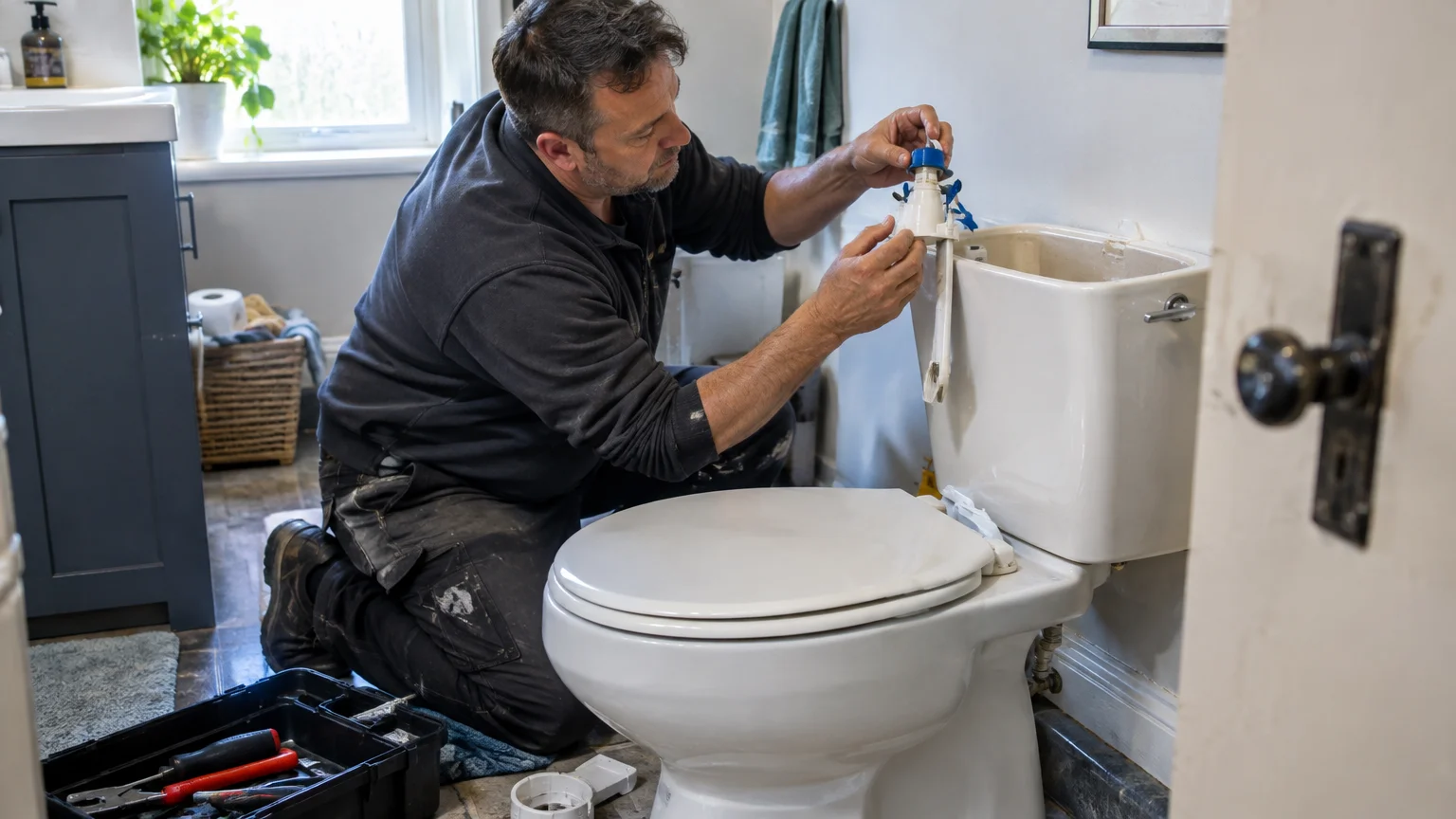
A toilet that keeps running may need only a flapper or fill valve. Consider whether the bowl, tank, and other parts remain sound. If many parts fail together, a new fixture may be more reliable.
Water around the base needs quick attention. It may come from a bad seal, cracked bowl, loose supply connection, or condensation. Clean the water and find the source before floor damage spreads.
Plumbing conditions to check before installation
The floor must be stable, and the flange must be secure. A toilet should not rock after the nuts are tightened. Do not over-tighten them because porcelain can crack.
Check the drain and vent when the old toilet had poor flushing or repeated clogs. A new fixture alone may not fix a blocked or poorly vented system.
The supply valve should close fully and stay easy to reach. A corroded valve may leak when the old toilet is disconnected. Fix that issue before fitting the new supply line.
A business restroom may need stronger fixtures, special clearances, or accessibility planning. Property owners should confirm the intended use before ordering a home toilet for a busy public space.
How do you choose and install the best toilet for your home?
The best toilet fits the room, matches the rough-in, suits the users, and works well. A careful checklist can narrow the choices before installation. Professional advice can prevent damage when the plumbing or floor condition is unknown.
A practical checklist for comparing toilet models
- Measure the rough-in from the finished wall to the center of the floor bolts.
- Check room clearance around doors, walls, cabinets, tubs, and showers.
- Choose the bowl shape that gives comfort without blocking the room.
- Compare toilet height with the needs of children, adults, and mobility-limited users.
- Review water use and performance data from the maker and trusted testing sources.
- Confirm replacement parts for the flapper, fill valve, flush valve, seat, and tank hardware.
- Inspect the flange, shutoff valve, floor, drain, and vent before fitting the fixture.
A homeowner does not need a professional for every check. Basic measuring, cleaning, and simple part replacement may be safe when the shutoff valve works and the cause is clear. Turn off the water first, drain the tank, and keep the work area dry.
When professional plumbing advice can prevent installation problems
Call for help when the toilet rocks, the flange is damaged, the floor is soft, or the supply valve will not close. Help is also needed when water leaks from the base, several fixtures drain slowly, or the toilet still clogs after simple repairs.
Professional installation may be best for wall-hung toilets, bidet seats with electrical needs, unusual rough-ins, and bathroom layout changes. The installer can check the seal, level, supply line, connection, and flush operation.
Magnolia Texas Plumbing provides plumbing guidance for homes and properties in and around Magnolia. Service areas include Downtown Magnolia, Mostyn Manor, Pinehurst, Stagecoach, Tomball, The Woodlands, and nearby communities. A local fixture plumber can compare options, inspect existing conditions, and plan toilet repair or installation when a simple replacement is not enough.
Frequently Asked Questions
How do you choose a toilet for a small bathroom?
Measure the rough-in, bowl projection, door swing, and space beside nearby fixtures. A round-front or compact elongated toilet may fit better than a full elongated model. The tank also needs repair access. The final choice should leave room for cleaning and comfortable use.
How do you fix a toilet that keeps running?
A running toilet often has a worn flapper, wrong water level, stuck handle, or failing fill valve. A homeowner can check these parts after shutting off the water. If the cause is unclear or the shutoff valve leaks, arrange a professional inspection.
What is the difference between a comfort-height and standard toilet?
A comfort-height toilet has a taller bowl and seat than a standard model. Many taller adults find it easier to use. Children and shorter users may prefer a lower fixture. Consider balance, mobility, and seat thickness before choosing.
Is a pressure-assisted toilet better than a gravity toilet?
Neither system is right for every home. Pressure-assisted toilets can flush strongly, but they may be louder and use different parts. Gravity toilets are familiar and often simple to maintain. Let the layout, users, noise level, and plumbing guide the choice.
Can a homeowner repair a toilet fill valve?
A homeowner may replace a fill valve when the water shuts off fully and the part is easy to identify. Close the supply before draining the tank. Professional help is safer when the valve will not close, the connection is corroded, or water leaks during the repair.
Key Takeaways
- Measure the rough-in and bathroom clearances before choosing a toilet.
- Match bowl shape, height, and flush style to the people using the room.
- Compare water use with real flush performance and repair access.
- Inspect the flange, floor, supply valve, drain, and vent before installation.
- Use professional help for leaks, cracks, repeated clogs, or damaged plumbing.
Conclusion
Choosing a toilet involves more than matching a color or style. The fixture must fit the rough-in, leave enough room, support comfortable use, and work with the property’s plumbing. Water use, flush performance, cleaning, and replacement parts also matter.
Simple checks and routine care are often safe for homeowners. A clear running-toilet problem may need only a flapper or fill valve. Cracked porcelain, damaged flanges, unstable floors, hidden leaks, and repeated clogs need a closer inspection. Toilet repair cost depends on the part, access, damage, and urgency, and the final cost is confirmed on a quote.
Magnolia Texas Plumbing helps property owners make informed fixture choices. Contact us to discuss toilet selection, repair, or installation needs.