What counts as a plumbing emergency? It is a sudden plumbing problem that may harm people, damage property, spread sewage, or stop needed water service. Burst pipes, major leaks, overflowing toilets, unsafe water heaters, and severe backups need quick action. A small, controlled drip may wait, but spreading water should not.
A plumbing crisis can feel stressful when water moves through floors, walls, or ceilings. Stay calm, stop the water if you can do so safely, and keep away from electrical or sewage hazards. Magnolia Texas Plumbing helps property owners understand urgent plumbing problems and choose a safe next step.
Table of Contents
- What counts as a plumbing emergency?
- Which plumbing problems require immediate attention?
- What should you do first during a plumbing emergency?
- When is a blocked drain an emergency?
- Is a water heater problem considered a plumbing emergency?
- When should you call an emergency plumber?
- How can you prepare for future plumbing emergencies?
- Frequently Asked Questions
What counts as a plumbing emergency?
A plumbing emergency puts people, property, or normal building use at risk. It may need immediate help when water cannot be controlled, sewage enters the building, or a failed system creates another danger. The key issue is the risk of waiting.
How much water is escaping or spreading?
The amount and location of water both matter. A small drip under a sink may not need emergency service if the shutoff valve stops it. A steady stream from a broken supply line can quickly reach floors, drywall, cabinets, and personal items.
Water near outlets, appliances, electrical panels, or light fixtures is dangerous. Stay away from wet electrical areas. Leave the building if the risk is serious. The fire department or utility provider may need to help with an immediate hazard outside a plumber’s work.
Could the problem cause immediate property damage or health risks?
A plumbing issue becomes urgent when waiting may make damage or exposure worse. Sewage carries harmful germs and should not be touched without proper protection. A leak inside a wall may also harm wood and insulation before water appears on the surface.
Homeowners, tenants, and property managers should think about nearby rooms and other units. One failed pipe can affect several areas in a building. A licensed plumber can find the source, stop the flow, and plan a safe plumbing repair.
Which plumbing problems require immediate attention?
Burst pipes, large leaks, sewage backups, and uncontrolled overflows usually need fast plumbing help. The problem is not only the fixture itself. Water or waste can spread through a property very quickly.
Burst pipes, major leaks, and flooding
A burst pipe can release water behind walls, below floors, or above ceilings. Signs may include rushing water, sudden pressure loss, wet spots, bulging drywall, stains, or water far from a fixture. Close the main water shutoff if you can reach it safely.
Major leaks from toilets, sinks, washing machines, or water heaters also need quick attention. Put a container under a small, controlled leak if it is safe. Do not climb into unsafe areas or remove electrical panels. Damage may continue even after the visible water slows.
Burst pipes can need more than a simple patch. Hidden water may remain inside walls or beneath floors. A prompt check can help find the failed section and reduce further damage.
Overflowing toilets, sewage backups, and severe drain blockages
Stop an overflowing toilet at once. The shutoff valve is often near the wall or floor behind the toilet. If the bowl contains sewage, keep children and pets away. Do not touch the water or flush again.
Sewage in a tub, floor drain, or sink may point to a deeper blockage. A severe backup can affect more than one fixture. Toilet Repair can help with leaks, clogs, running toilets, and flush problems. A larger backup may need urgent drain work and a full line check.
What should you do first during a plumbing emergency?
The first steps are simple: protect people, stop the water if safe, and limit damage. Do not take apart a pressurized pipe, enter dirty water, or work near wet electrical equipment.
How to shut off the water supply safely
For a fixture leak, turn the small shutoff valve clockwise until it stops. For a larger leak, close the main water valve. It may be near the water meter, where the service line enters the building, or in a utility space.
Some homes have more than one shutoff. Tenants should ask the property manager where the main valve is located. Businesses and multi-unit properties may need a building manager to close the right valve without stopping water to other areas.
Do not force a valve that will not move. Too much pressure can break it and release more water. A plumber can handle a stuck valve and repair the failed part safely.
How to limit damage before the plumber arrives
Move furniture, boxes, and electronics away from water when safe. Use towels or containers for a small clean-water leak. Never use a household vacuum near outlets or wet appliances.
Take clear photos of the affected rooms and items. Note when the problem began, which fixtures are involved, and whether the main valve was closed. These details give useful plumbing advice to the person handling the emergency.
When is a blocked drain an emergency?
A blocked drain is an emergency when wastewater backs up, several fixtures stop draining, or water threatens the building. One slow sink may allow time for routine service. Repeated backups may point to a deeper drain problem.
Warning signs of a serious blockage
Watch for these signs of a major drain issue:
- Sewage or dirty water rises from a tub, floor drain, or toilet.
- Several drains back up or empty slowly at the same time.
- Gurgling sounds come from toilets, sinks, or shower drains.
- Water enters one fixture when another fixture is used.
- A foul smell remains after basic cleaning.
A plunger may help with a simple sink or toilet clog. Do not plunge hard when sewage is already spreading. This may move dirty water into another fixture or hide the cause for a short time.
Why chemical drain cleaners may make the problem worse
Chemical drain cleaners can burn skin and eyes. They may harm some pipes and leave dangerous liquid inside the line. They can also create a risk for the plumber who later opens the trap or drain.
A homeowner can remove a visible hair or food blockage from a removable screen. Cleaning a trap may also be safe when the area is clear and no harsh chemical was used. Deep, repeated, or sewage-related blockages need professional testing. Drain cleaning may be part of the repair, but the cause should also be found.
Is a water heater problem considered a plumbing emergency?
A water heater problem is urgent when the tank leaks, water becomes scalding, gas may be present, or the unit creates a fire or electrical danger. A simple loss of hot water may be less urgent, but it still needs timely repair in homes, rentals, and businesses.
Signs of a dangerous or failing water heater
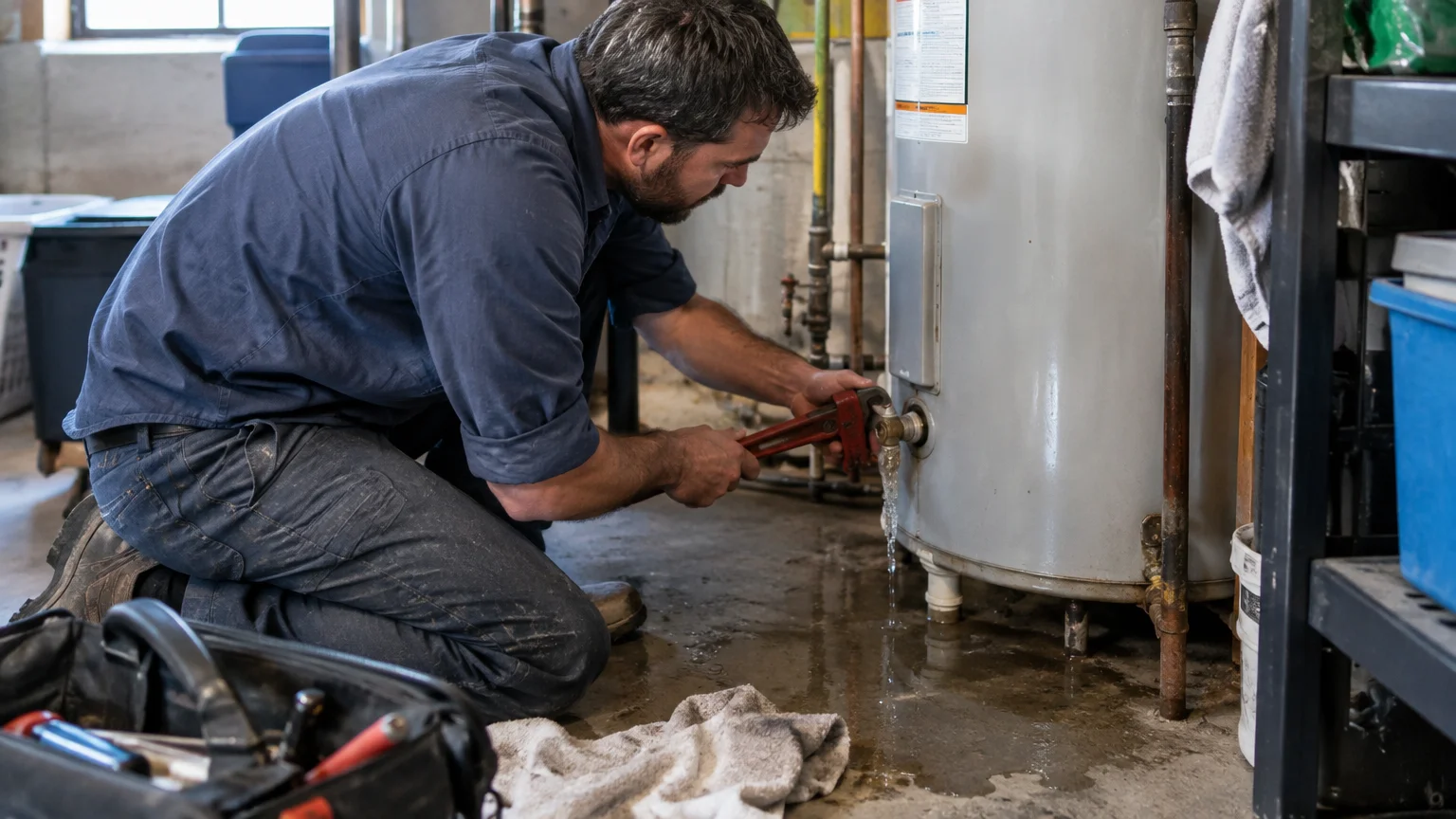
Warning signs include water around the tank, a damaged relief valve, loud banging, a burning smell, smoke, or repeated tripped breakers. A leaking tank may release more water as it fills. Turn off the heater’s water supply if safe. Use the energy shutoff only when it is easy to reach and clearly marked.
Gas odors need special care. Do not light matches, operate switches, or use a phone inside an area with a strong gas smell. Leave the building and contact the gas utility or emergency services from a safe place. A plumber can handle water-side repairs, but gas emergencies must follow local safety rules.
What to do when there is no hot water
First, check whether the issue affects every hot-water fixture. One cold faucet may have a local mixing valve or fixture problem. No hot water throughout the building may involve the heater, power supply, thermostat, burner, or control system.
Do not remove covers or test live electrical parts. Water Heater Repair can help check tank and tankless systems. The right repair depends on the heater type, age, visible damage, and safety condition. Plumbing costs also vary with the parts, access, damage, and urgency, so the final cost is confirmed on a quote.
When should you call an emergency plumber?
A homeowner should call an emergency plumber when water cannot be stopped, sewage backs up, a hidden leak is likely, or a plumbing failure threatens the building. Professional help is also needed when work involves gas, electricity, pressurized lines, or dirty water.
Situations that need licensed professional help
Call promptly for a burst pipe, flooding, a leak inside a wall, repeated sewage backup, or a leaking water heater. Help is also needed when the main shutoff will not close, several fixtures fail together, or a repair attempt makes the problem worse.
A homeowner does not always need a professional for a loose faucet handle, a removable screen, or a simple clog. Safe DIY checks should stop when water spreads, parts break, the cause is unclear, or danger appears. Leaks & Burst Pipes can help with urgent leak checks and pipe repair needs.
What information to provide when requesting urgent service
Explain what happened, where the water or sewage is located, and whether the main valve is closed. Also mention the building type, affected fixtures, visible damage, and any gas, electrical, or contamination concerns.
Tenants should notify the property owner or manager quickly. Business owners should keep customers and staff away from unsafe areas. Magnolia Texas Plumbing can help review the situation and identify the right emergency plumbing response for a property.
How can you prepare for future plumbing emergencies?
Preparation makes an emergency easier to manage. Every household, rental, and business should know where the main water shutoff is located. Keep basic supplies in a place that is easy to reach.
Essential shutoff locations and emergency supplies
A simple emergency kit may include a bucket, towels, gloves, a flashlight, and an adjustable wrench. Store it away from areas that could flood. Keep contact details for the property manager, water utility, insurer, and trusted plumbing company in a safe place.
Property owners should label fixture shutoffs and test them during routine checks. Inspect exposed supply lines, washing machine hoses, water heater connections, and visible pipe joints. Replacing worn parts before they fail may reduce the chance of sudden damage.
People should learn about gas safety only through approved guidance. A strong gas odor, hissing sound, or suspected leak means leaving the area and contacting the gas utility or emergency services. Never search for a gas leak with a flame.
Key takeaways for homeowners, tenants, and property managers
- Stop water at the fixture or main valve when it is safe.
- Keep people away from sewage, wet electrical areas, and gas hazards.
- Treat spreading water, major backups, and burst pipes as urgent.
- Use DIY checks only when the cause and conditions are safe.
- Give the plumber clear details about the leak, damage, and shutoff status.
A plumbing emergency is defined by risk, not by the age of a fixture. Fast action may limit damage, but unsafe repairs can create bigger problems. Contact us today for urgent plumbing guidance and service from Magnolia Texas Plumbing.
Frequently Asked Questions
How do you check for a gas leak?
Never use a flame to find a gas leak. A strong gas smell, hissing sound, or suspected leak means everyone should leave the building. Do not switch lights or use phones inside. From a safe place, contact the gas utility or emergency services. A plumber can address related water and appliance connections after the area is safe.
What should someone do if a toilet keeps running?
A running toilet is usually not an emergency if the shutoff works and no water reaches the floor. Turn the valve clockwise to stop the flow. Then check the flapper, float, and handle for simple problems. If the valve fails, the toilet leaks, or several toilets back up, professional Toilet Repair is appropriate.
Why does a toilet keep running after it is flushed?
A toilet may keep running because the flapper does not seal, the float is set wrong, the fill valve is worn, or the handle chain catches. A homeowner can check these parts without forcing them. If the bowl overflows, the shutoff fails, or water appears around the base, the issue needs prompt plumbing attention.
Is a slow drain an emergency?
A slow drain is not always an emergency. One sink may improve after safe strainer cleaning or careful plunging. It becomes urgent when several fixtures drain slowly, sewage rises, foul water returns, or the problem causes flooding. Avoid chemical cleaners when the cause is unknown.
Can a homeowner repair a burst pipe?
A homeowner may close the main water valve and move items away from clean water when safe. Cutting, clamping, or opening a burst pipe is not a safe general repair, especially inside a wall or near electricity. A licensed plumber should inspect the line, stop hidden leaks, and confirm that the damaged section is secure.
If you are unsure what you are seeing, have the problem checked before it grows. Contact us through Magnolia Texas Plumbing for help with urgent plumbing concerns.